
If your answer to these questions is YES, then you have reached the correct website!
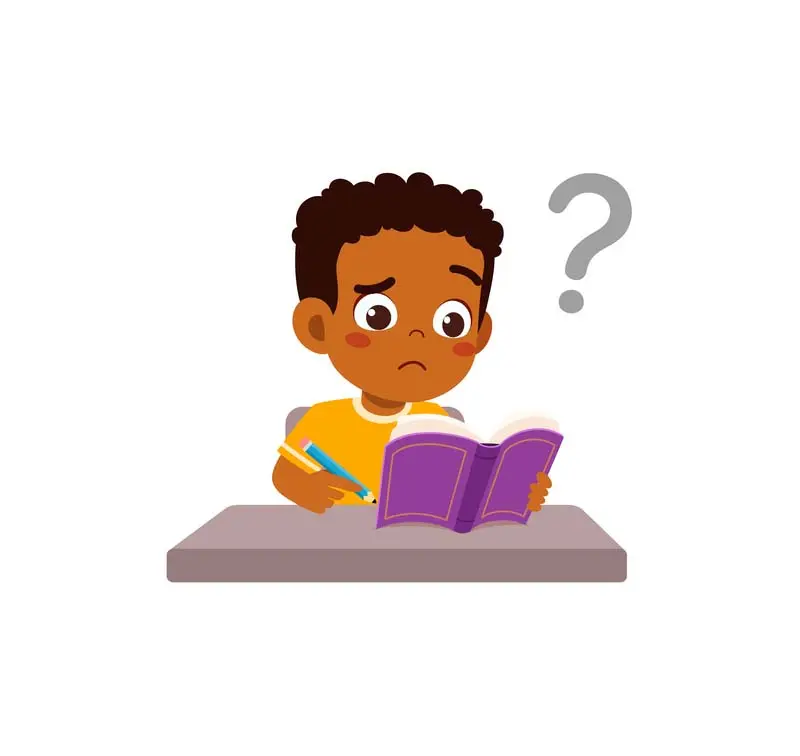


A Qualified Dyslexia Tutor You Can Trust
Are you looking for a friendly and fully qualified dyslexia tutor and assessor based in Northern Ireland? Look no further than FORGE DYSLEXIA SUPPORT SERVICES. Get to know a bit more about me.
My name is Heather Rowan. I am a graduate of Queen's University, Belfast (B.A. Hons.) and my working passion is to give professional support to those who are hampered by Dyslexia and the associated difficulties in reading, writing and spoken communication.
Having gained experience and initial qualifications in teaching literacy and essential skills to adults, I quickly became aware that the need of those who have dyslexia is much more pronounced.
I founded FORGE DYSLEXIA SUPPORT SERVICES in Newtownards in 2009 and my aim is to provide professional dyslexic support to people of all ages.
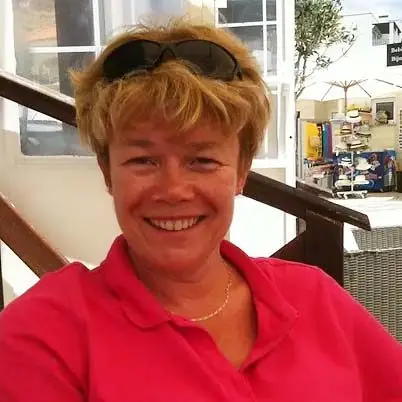

I am a full member of PATOSS (Professional Association for Teachers of Students with Specific Learning Difficulties (SpLD) and I fully abide by their code of Ethics.
Being a full member of PATOSS ensures that I keep my knowledge and practice up-to-date through regular training.


Indicators of Dyslexia
Contrary to popular misconception, Dyslexia is not only about literacy, although weaknesses in literacy are often the most visible sign. Dyslexia affects the way information is processed, stored and retrieved, with problems of memory, speed of processing, time perception, organisation and sequencing.

Written Work
A person with dyslexia will often:
- Have a weak ability in written work compared with oral ability.
- Produce very untidy and messy handwritten work. This will have many mistakes which will often be crossed out and words will be misspelled in several ways.
- Be confused by letters and numbers which look similar, particularly b/d, p/g, p/q.
- Have poor handwriting, with many 'reversals' and badly formed letters.
- Use capital letters inappropriately.
- Spell the same word several different ways in one piece of writing.
- Produce badly set-out written work, with no use of paragraphs.

Reading
A person with dyslexia will often:
- Make poor reading progress, especially using look-and-say methods.
- Find blending letters difficult.
- Have problems knowing where to divide syllables when reading and spelling.
- Read very slowly and without expression, especially when reading aloud.
- Omit words when reading, or read extra words.
- Misread common words.
- Have difficulty with reading and comprehension of text

Time
A person with dyslexia will often:
- Have difficulty learning to tell the time (e.g. use of an analogue clock, the direction of clock hands, terminology ‘a quarter to six’, ‘half past five’).
- Have poor timekeeping and general awareness of time.
- Have poor personal organisation ability (e.g. preparation of school bag, PE kit bag).
- Have difficulty remembering what day of the week it is, seasons of the year, months of the year.

Behaviour
A person with dyslexia will often:
- Use a range of work avoidance tactics (e.g. engaging in irrelevant conversation, sharpening pencils, looking for books).
- Often seem to 'day-dream', appear not to be listening.
- Be easily distracted.
- Be the class clown, or be disruptive or withdrawn.
- Be excessively tired, due to the amount of concentration and effort required.

Skills
A person with dyslexia will often:
- Have poor fine motor skills, leading to weaknesses in the speed, control and accuracy of the writing instrument.
- Have a limited understanding of non-verbal communication.
- Be confused by the difference between left and right.
- Have unspecified hand preference.

Numeracy
A person with dyslexia will often:
- Be confused with number order eg units, tens, hundreds.
- Need clarification with mathematical symbols, such as + and x signs.
- Have difficulty remembering anything in sequential order e.g. times tables, days of the week, months of the year, the alphabet.
Client Reviews